
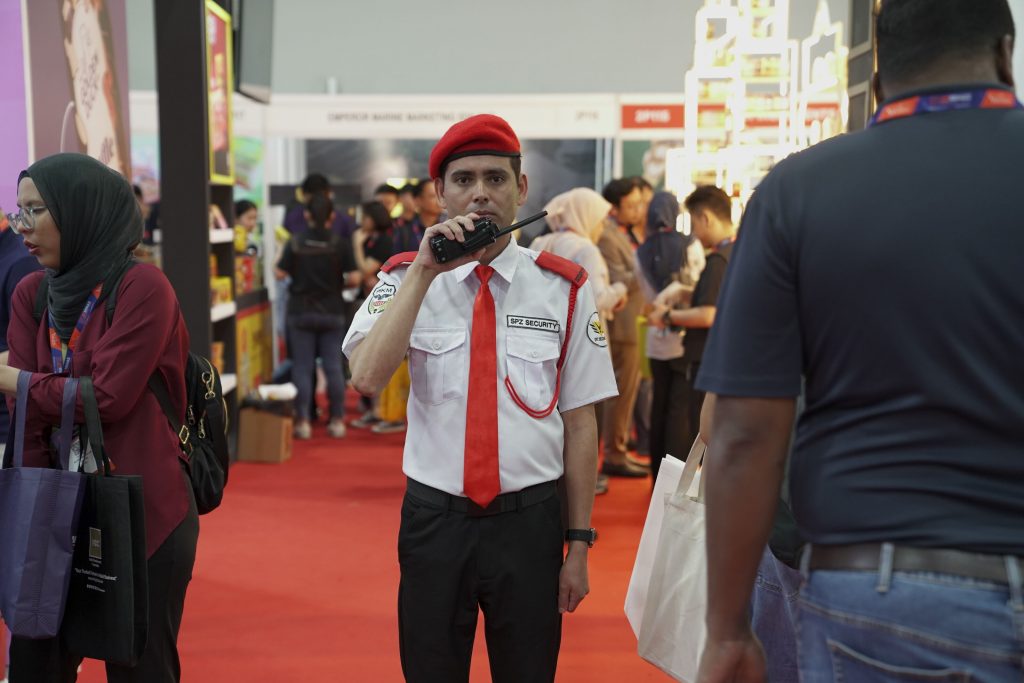
Retail security helps businesses manage access, monitor public and staff areas, report suspicious activity and respond to security incidents. Shopping malls, supermarkets, standalone retail shops and shoplots have different operating layouts, customer traffic and security priorities.
A suitable retail security plan should support a safe shopping environment while allowing customers, employees, suppliers and delivery personnel to move through the premises efficiently.
What Do Retail Security Services Include?
Retail security duties may vary by location and contract. Common arrangements include:
- Entrance monitoring: Observe designated entrances and report suspicious activity.
- Security patrols: Check public areas, corridors, car parks, loading zones and other assigned locations.
- Staff and service-area access: Follow approved procedures for restricted areas and back-of-house spaces.
- Incident reporting: Document disturbances, suspected theft, property damage and other incidents.
- Opening and closing checks: Follow the retailer’s procedures for securing designated areas.
- Emergency support: Follow the premises’ emergency plan and notify the appropriate personnel.
Security guards should follow the site’s authority and escalation procedures. They should not make unsupported accusations or use force outside their lawful authority.
What Are the Main Security Priorities for Shops and Shopping Malls?
Different retail environments have different priorities.
Shopping malls
- Monitor entrances, common areas and designated parking zones.
- Support crowd movement during busy periods and events.
- Report unattended items or suspicious activity through established procedures.
- Coordinate with mall management and other authorised teams.
Supermarkets and retail stores
- Observe customer and staff areas.
- Monitor designated entrances and exits.
- Report suspected theft or unusual behaviour according to store policy.
- Follow procedures for stockrooms and delivery areas.
Shoplots and standalone outlets
- Monitor the main entrance and surrounding premises.
- Support opening and closing procedures.
- Check designated service areas and access points.
- Report damage, attempted unauthorised access or other incidents.
Retailers should also review CCTV coverage, lighting, stockroom access and key-control procedures. These measures complement security guards; they do not replace an assessment of the actual site.
Retail Theft and Premises Security
DOSM recorded 21,656 cases of other thefts in Malaysia in 2024. This is a broad category that includes different types of theft, including theft in shops, houses or buildings, vehicles and other settings. It is not a retail-only or shoplifting-only figure.
For retailers, this figure provides broader property-crime context rather than a measure of shoplifting rates. Security planning should focus on the site’s actual needs, including stockroom access, delivery procedures, entrance monitoring, CCTV coverage and incident reporting.
Five Factors to Review When Planning Retail Security
Retail security requirements should reflect the actual premises rather than general retail sales figures. Businesses can review five practical factors before deciding on security coverage:
- Customer traffic: Consider normal operating hours and peak periods.
- Entrances and exits: Identify public entrances, service entrances and emergency exits.
- Stock and cash handling: Review stockroom access, delivery procedures and relevant cash-handling arrangements.
- Previous incidents: Review documented security incidents and recurring concerns.
- Security equipment: Check CCTV coverage, lighting, alarms and communication arrangements.
These five factors form a practical site-review checklist, not an official retail crime statistic. The number of guards should be determined by the premises’ layout, operating hours and assessed risks.
Frequently Asked Questions
1. What does a retail security guard do?
Retail security guards may monitor entrances, patrol assigned areas, report suspicious activity, assist with crowd movement and follow the premises’ incident procedures.
2. Can retail security guards help prevent shoplifting?
Visible security presence, observation, access procedures and timely reporting may support a retailer’s loss-prevention measures. No security provider should guarantee that all theft can be prevented.
3. Do small shoplots need security guards?
The need depends on operating hours, location, site layout, previous incidents and the business’s security requirements. Some businesses may require regular manned guarding, while others may need a different combination of security measures.
4. What should a shopping mall consider when hiring a security company?
Review licensing, guard deployment, supervision, patrol arrangements, incident reporting, crowd-management procedures and coordination with mall management.
Conclusion
Retail security is most effective when guard duties align with the business’s layout, operating procedures and identified risks. A tailored plan can help shops, malls and shoplots improve access monitoring, incident reporting and day-to-day security management.
Need retail security for your shop, mall or commercial premises? Contact SPZ Security to discuss your location, operating hours and required security coverage.