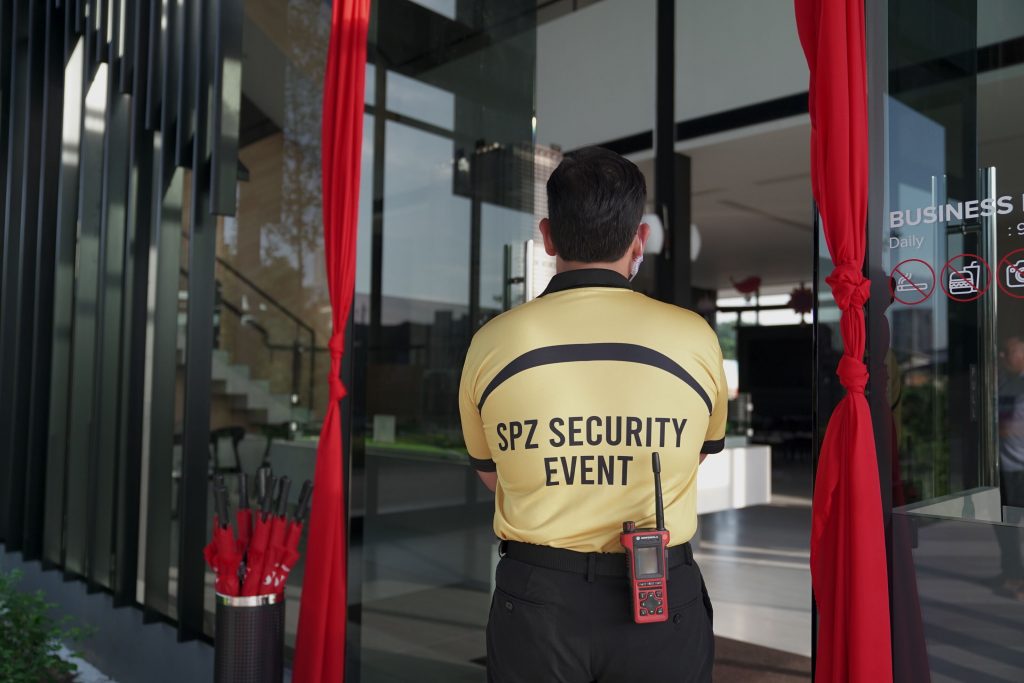
Event security helps organisers manage entry, monitor crowds, protect designated areas and respond to incidents. Concerts, sports events, exhibitions, corporate functions and private celebrations each have different attendance patterns, venue layouts and security requirements.
A good event security plan starts before the event opens. Organisers should define guard duties, entry procedures, communication channels, emergency responsibilities and coordination with venue management.
What Do Event Security Services Include?
Depending on the venue, event type and agreed scope, event security may include:
- Entrance and ticket-check support: Monitor designated entry points and follow the organiser’s admission procedures.
- Crowd observation: Identify congestion, disturbances and other concerns in assigned areas.
- Perimeter and restricted-area monitoring: Help manage access to backstage areas, staff zones or other authorised locations.
- Patrols: Check designated public areas, entrances and surrounding spaces.
- Incident reporting: Communicate disturbances, medical concerns and suspicious activity to the responsible team.
- Emergency coordination: Follow the venue’s procedures and communicate with event management and emergency services when required.
Ticket scanning, bag checks, searches, emergency medical care and technical crowd-safety duties should only be undertaken within the personnel’s authorised scope and the venue’s procedures.
How Should Security Differ Between Concerts, Sports Events and Private Functions?
Concerts and festivals
- Plan entry and exit arrangements for expected attendance.
- Monitor queues and areas where congestion may develop.
- Define access rules for backstage and production areas.
- Establish communication procedures for disturbances and emergencies.
Sports events
- Identify spectator entrances, seating areas and restricted zones.
- Plan procedures for crowd movement before and after the event.
- Coordinate with venue management on prohibited items and incident escalation.
- Clarify responsibilities for spectator disputes and other disturbances.
Private and corporate events
- Verify guest access according to the organiser’s requirements.
- Monitor designated entrances and restricted areas.
- Coordinate with venue staff and event organisers.
- Establish a clear contact person for incidents and urgent decisions.
These are planning considerations, not a claim that every event needs the same number of guards or identical security arrangements.
How Many Security Guards Are Needed for an Event?
There is no single guard-to-attendee ratio that is appropriate for every event. The required deployment depends on factors such as:
- Expected attendance and the venue’s approved capacity.
- Number and layout of entrances and exits.
- Event duration and operating schedule.
- Crowd profile, activities and identified risks.
- Restricted areas and backstage requirements.
- Emergency arrangements, venue rules and instructions from relevant authorities.
This six-factor checklist is a planning aid, not an official Malaysian staffing formula.
Event organisers should work with the venue and relevant authorities to confirm the required arrangements. They should also ensure that emergency exits remain accessible and that responsibilities for evacuation, medical incidents and other emergencies are clearly assigned.
For example, Kuala Lumpur Convention Centre publishes event safety and evacuation guidance for organisers and visitors. This highlights the importance of understanding the venue’s own emergency procedures before an event takes place.
Crime Statistics and Event Venue Security
DOSM recorded 575 robbery cases involving an establishment or institution in Malaysia in 2024. However, the published category does not identify incidents at concerts, sports events or private functions separately.
For event organisers, security planning should therefore focus on the specific venue, expected attendance, entrance and exit arrangements, restricted areas, crowd movement and emergency procedures rather than applying this national figure directly to an individual event.
What Do Event Venue Safety Standards Cover?
The ASEAN MICE Venue Standard for event venues covers safety and security considerations such as visible fire exit signs, sufficient security personnel, maintenance and inspection records, fire drill evidence, safety policies, crowd management and evacuation procedures.
This shows that event security planning should go beyond entrance checks. Organisers and venue operators should also consider crowd movement, restricted areas, emergency communication and coordination with venue management.
The level of security required should reflect the event’s expected attendance, venue layout, risk assessment and emergency arrangements.
What Should Organisers Confirm Before Hiring an Event Security Company?
Before the event, confirm the following 5 operational details:
- Scope of work: Specify which entrances, areas and activities the guards will cover.
- Deployment schedule: Confirm reporting times, shift handovers and arrangements for extended event hours.
- Communication: Establish contact persons, communication methods and escalation procedures.
- Emergency coordination: Clarify how security personnel work with venue management and emergency services.
- Post-event reporting: Decide how incidents, access issues and other concerns will be documented.
For emergencies in Malaysia, the national emergency number is 999. It should be used for genuine emergencies, not routine event enquiries.
Frequently Asked Questions
1. What do event security guards do?
Depending on the assignment, event security guards may monitor entrances, support access control, observe crowds, patrol designated areas and report incidents to the event organiser or venue management.
2. How many security guards are needed for a concert?
The requirement depends on the venue, attendance, entry and exit layout, event activities and assessed risks. Organisers should confirm deployment with the security provider and venue rather than relying on a universal ratio.
3. Can event security guards handle crowd control?
They may perform assigned crowd-management duties within their training, authority and the event plan. The organiser should clearly define responsibilities and escalation procedures.
4. Should an event have an emergency plan?
Organisers should understand and follow the venue’s applicable emergency and evacuation procedures and any requirements set by relevant authorities. Responsibilities should be communicated to the appropriate event personnel before the event begins.
5. What information should I provide when requesting an event security quotation?
Provide the event date, venue, expected attendance, operating hours, event type, number of entrances, restricted areas and any special requirements. The provider can then assess the scope and proposed deployment.
Conclusion
Event security requires planning around the venue, expected attendance, entry arrangements, restricted areas and emergency procedures. Clear responsibilities and effective communication help organisers coordinate security before, during and after an event.
Planning a concert, sports event or private function in Malaysia? Contact SPZ Security to discuss your event details and confirm the security services available for your requirements.