Warehouse Security Services in Malaysia: Protecting Inventory and Storage Facilities
Warehouse security services help businesses manage access to storage facilities, monitor vehicle movements and report suspicious activity. Depending on the site, security duties may cover visitor registration, delivery procedures, patrols and restricted-area monitoring.
SPZ Security Malaysia provides industrial security services that include warehouses. The final deployment should reflect the facility’s layout, operating hours, stock-handling procedures and security requirements.
Why Do Warehouses Need a Security Plan?
Warehouses may receive goods from multiple suppliers, accommodate delivery vehicles and store inventory awaiting distribution. Poorly defined entry procedures can make it harder to identify who entered the site or investigate discrepancies.
Common areas to review include:
- Main gates and secondary entrances.
- Loading and unloading bays.
- Storage areas containing high-value goods.
- Vehicle entry and exit points.
- Contractor and visitor access.
- After-hours access arrangements.
The purpose of security is to support clear procedures and reporting. Inventory reconciliation and stock control remain the responsibility of the warehouse’s operational team.
Cargo Crime Statistics: Why Warehouse Security Matters
According to the Transported Asset Protection Association Asia Pacific (TAPA APAC), its 2025 dataset recorded 488 cargo crime incidents across Asia-Pacific. Facilities accounted for 22.7% of recorded cargo crime incidents, while vehicle-related incidents accounted for 26.2%. Reported direct losses exceeded US$30 million, excluding incidents without declared loss values.
These are regional cargo-crime figures, not Malaysia-only warehouse statistics. They demonstrate why warehouse security planning should consider loading bays, storage areas, vehicle movements, authorised collections and perimeter access.
What Do Warehouse Security Guards Do?
Depending on the contract, duties may include:
Access control: Check entry according to the warehouse’s approved procedures.
Delivery monitoring: Record vehicle details and direct drivers to designated areas.
Collection checks: Follow authorised procedures for goods leaving the premises.
Site patrols: Check assigned entrances, perimeter areas and storage zones.
Incident reporting: Document suspicious activity, property damage and access-control issues.
All duties should be clearly documented so that guards, warehouse supervisors and transport personnel understand their responsibilities.
How to Improve Loading Bay and Vehicle Security ?
Loading bays can involve frequent movement of people, vehicles and goods. Warehouse management should establish a consistent process for registering vehicles, verifying delivery documents and confirming authorised collections.
Useful procedures include:
- Identifying the person responsible for approving collections.
- Recording vehicle registration details where required.
- Defining where drivers should wait and report.
- Establishing rules for visitors and contractors.
- Escalating discrepancies to authorised warehouse personnel.
Security guards should follow the warehouse’s documented procedures rather than independently approve stock movements.
Four Warehouse Security Checks to Include in Daily Operations
1. Vehicle and Delivery Records
Record vehicle details, driver information, entry and exit times, and relevant delivery documents according to the warehouse’s procedures.
2. Loading Bay Monitoring
Monitor loading and unloading areas for unauthorised access or suspicious activities.
3. Perimeter and Restricted Areas
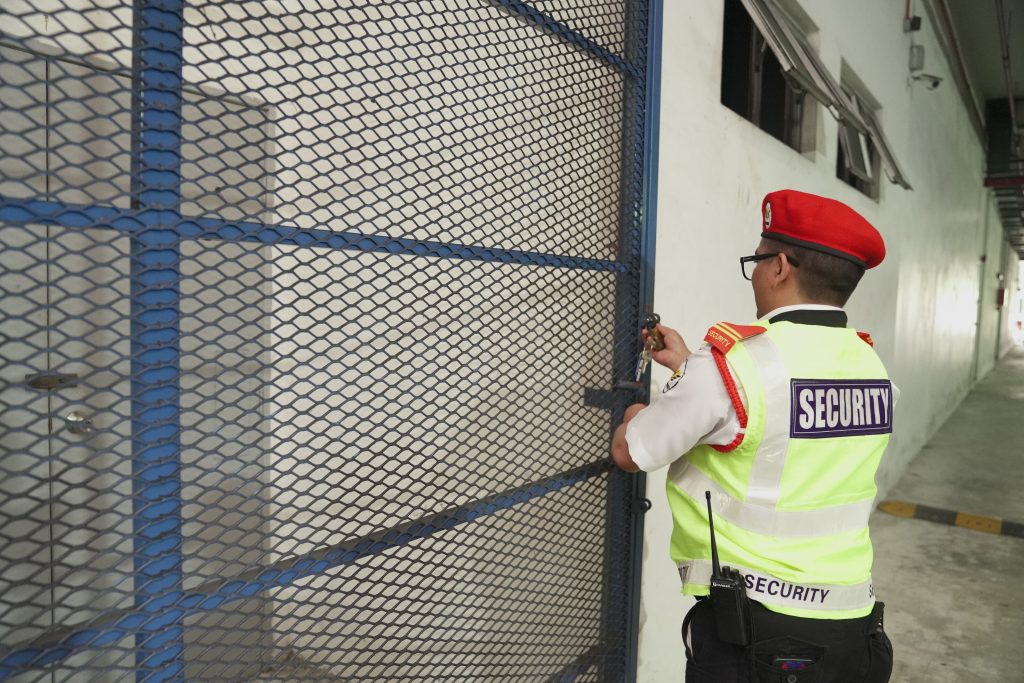
Check fences, gates, locks and restricted areas during scheduled patrols.
4. Incident Records and Shift Handover
Document unusual incidents and pass important security information to the next shift.
These four checks are a practical planning checklist, not an official industry statistic. Warehouse management should define the exact procedures and responsibilities before security personnel are deployed.
Warehouse Security and CCTV: How Do They Work Together?
CCTV can help authorised personnel observe designated areas and review incidents, while physical security personnel can conduct patrols, monitor entry and report immediate concerns.
The two functions are complementary. CCTV does not replace access-control procedures, and guards should only perform monitoring duties when these are included in their scope and they are appropriately trained and authorised.
How to Choose Warehouse Security Services in Malaysia
Before selecting a provider, check:
- The provider’s relevant licence status.
- Proposed guard posts and patrol routes.
- Shift arrangements and supervision.
- Procedures for visitor, vehicle and incident records.
- Coordination with warehouse supervisors.
- The agreed coverage, exclusions and reporting process.
A site visit can help both parties define a realistic scope of work.
Warehouse Security Checklist
- Are all entry and exit points identified?
- Are drivers and visitors subject to clear procedures?
- Are loading bays monitored according to site requirements?
- Are goods collections authorised by the correct personnel?
- Are patrol duties recorded?
- Are incident contacts available to guards?
- Are procedures reviewed when the warehouse layout changes?
Frequently Asked Questions
1. What do warehouse security services include?
Depending on the agreement, services may include access control, visitor registration, vehicle monitoring, patrols and incident reporting.
2. Can warehouse guards prevent inventory theft?
Guards can support access monitoring and report suspicious activity. They cannot guarantee that all theft or inventory discrepancies will be prevented.
3. Are warehouse security services suitable for logistics centres?
Security arrangements can be planned for warehouses, distribution centres and logistics facilities according to their layout and operating requirements.
4. How do I request warehouse security services in Malaysia?
Contact SPZ Security Malaysia with your warehouse location, operating hours and security requirements.
Protect Your Warehouse with SPZ Security Malaysia
A suitable warehouse security arrangement combines clearly defined guard duties with consistent operating procedures and communication between security personnel and warehouse management.