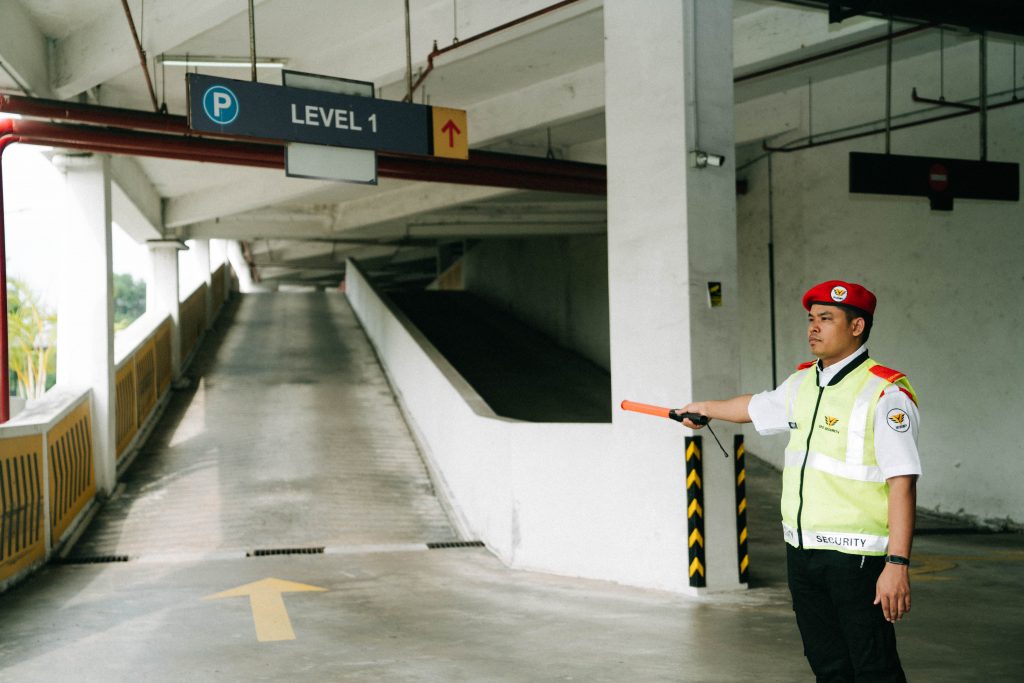
Industrial security services help businesses manage access to factories, plants, equipment storage areas and other industrial premises. Depending on the site, duties may include visitor checks, vehicle monitoring, perimeter patrols and incident reporting.
SPZ Security Malaysia lists industrial security services for factories, warehouses, plants and high-risk industrial zones. The security arrangement should be based on the site’s layout, operating hours and specific requirements.
Why Should Industrial Facilities Verify Their Security Provider?
In Malaysia, private security agencies are regulated under the Private Agencies Act 1971. Before appointing a security provider, businesses should check the agency’s licence status through the Ministry of Home Affairs (KDN).
For factories and industrial facilities, this is an important first step before reviewing guard deployment, access control, perimeter patrols and incident reporting procedures.
Security arrangements should be tailored to the facility’s operating hours, access points, restricted areas and site-specific risks.
What Do Crime Statistics Mean for Industrial Site Security?
Malaysia recorded 47,188 property crime cases in 2024, including 14,198 vehicle theft cases and 21,656 cases classified as other thefts. These figures cover different types of property crime nationwide and are not limited to factories or industrial facilities.
For industrial facilities, security planning should pay particular attention to vehicle access, equipment storage, loading areas and restricted zones. Although national property crime statistics do not show how many incidents occur at factories, they provide broader context for reviewing site access procedures, perimeter patrols and incident reporting.
What Do Industrial Security Services Include?
Industrial security services focus on monitoring people, vehicles and activities within designated areas. Depending on the agreed service scope, duties may include:
- Checking staff, visitor and contractor entry.
- Monitoring vehicle movements and deliveries.
- Conducting scheduled patrols.
- Observing loading bays and storage areas.
- Reporting suspicious activities or damaged access points.
- Following the site’s incident escalation procedures.
Clear written instructions help security personnel understand their responsibilities and coordinate with facility management.
Factory and Plant Security: What Is the Difference?
Factory security generally focuses on manufacturing premises, production areas, loading zones and material storage.
Plant security may involve more complex operating environments, restricted zones and coordination with site-specific safety procedures.
The two services can overlap. The appropriate deployment depends on the facility’s actual operations rather than its name alone.
How to Choose an Industrial Security Provider in Malaysia
Before appointing a provider, consider these factors:
Licence and compliance: Verify the company’s relevant licence status and applicable requirements.
Site assessment: Explain the number of entrances, restricted areas, operating hours and patrol requirements.
Guard deployment: Confirm post locations, shift arrangements, supervision and relief procedures.
Incident reporting: Ask how incidents, visitor records and shift handovers are documented.
Service scope: Clarify which duties are included, which are excluded and who is responsible for CCTV, alarms or emergency response.
Industrial Security Checklist for Facility Managers
Before confirming a security plan, ask:
- Are all entrances and exits identified?
- Are visitor and contractor procedures documented?
- Are restricted zones clearly marked?
- Are patrol routes and reporting duties defined?
- Are delivery and collection procedures consistent?
- Do guards know who to contact during an incident?
- Is the plan reviewed when site operations change?
Industrial Security Checklist for Facility Managers
1. What are industrial security services?
They are physical security arrangements for industrial facilities, which may include access control, patrols, vehicle monitoring and incident reporting.
2. Do factories need a customised security plan?
Yes. Factory layouts, operating hours, assets and access requirements vary. Security duties should reflect the site’s needs.
3. Can industrial security prevent all theft?
No. Security measures can help monitor access and report suspicious activity, but no provider can guarantee that every incident will be prevented.
4. How can I request industrial security services in Malaysia?
Contact SPZ Security Malaysia to discuss your facility’s location, operating requirements and proposed security arrangements.
Discuss Industrial Security with SPZ Security Malaysia
A practical industrial security plan starts with understanding the facility, defining responsibilities and establishing clear reporting procedures.